
More Than a Formula: Making Argument Paragraph Structure Visible Through PEEL
We are back in our same sixth-grade classroom, where we taught how to write in a formal tone. Now our sixth graders are learning how to write argumentative essays on whether mobile phones improve our lives. Their uncoached writing shows that they understand the content and are beginning to learn how to integrate their research notes into written-like text (see original student text below). However, their teachers have noticed that structuring their thoughts into a logical progression from claim to evidence to reasoning still deserves more attention. The WIDA ELD Standards, “Language Expectations in ELA for Key Language Use Argue,” expect that students should be able to “logically organize claim(s) with clear reasons and relevant evidence; offer a conclusion” (WIDA, 2020, p. 150, Figure 1).
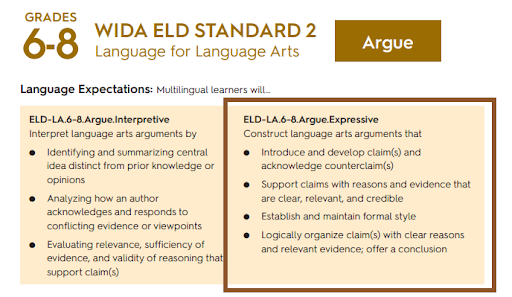
Figure 1. WIDA Language Expectations for Argue, English Language Arts, grades 6-8, p. 150
Language Expectations: Multilingual learners will…
ELD-LA.6-8.Argue.Interpretive
Interpret language arts arguments by
Identifying and summarizing central idea distinct from prior knowledge or opinions
Analyzing how an author acknowledges and responds to conflicting evidence or viewpoints
Evaluating relevance, sufficiency of evidence, and validity of reasoning that support claims(s)
ELD-LA.6-8.Argue.Expressive
Construct language arts arguments that
Introduce and develop claim(s) and acknowledge counterclaim(s)
Support claims with reasons and evidence that are clear, relevant, and credible
Establish and maintain formal style
Logically organize claim(s) with clear reasons and relevant evidence; offer a conclusion
To ensure multilingual learners meet these standards, the teacher designs a lesson to make the argument structure visible through the P-E-E-L paragraph mnemonic as one way to organize their thoughts to show how claims need to be supported by evidence, explanation, and a link to show the connection with the claim (Figures 2 and 3).
Uncoached Writing and Revised Text Using a PEEL Structure
Original Student Text
Do mobile devices improve our lives?
I think they do not because most of the negative traits have something to do with you. A phone is a very fun thing but for it to not effect your eyes you just don’t sit on it for a very long time. And the more you sit on it the more it gets addicting. A phone is a good thing to have around with so many features. And technology is improving so much. A phone can also be used as a tool for example you can do math or search something if you want to find out like a fact. you can watch movies or tv shows on the bus or on a car ride. you can also listen to music with headphones.
Revised Text Using PEEL Structure
-
Mobile devices can both help and harm us, but I believe they do not always improve our lives. For this reason, they can easily become addictive and distracting.
-
Many people spend long periods of time on their phones, and this overuse can affect their eyes, increase screen time, and even create unhealthy habits.
-
When people rely on their phones too much, they may feel pressure to stay online, which can make it harder to focus on schoolwork or enjoy real-life activities.
-
For these reasons, mobile devices do not always improve our lives, especially when they are used in ways that lead to stress, distraction, or addiction.
How do we go from uncoached writing to structured writing to show how arguments unfold logically? Below are descriptions of Deconstruction and Joint Construction to apprentice students to argument writing.
Before we go any further, we want to communicate some common pitfalls of using any acronym or mnemonic device in teaching.
Common PEEL Teaching Pitfalls
Treating PEEL as a formula
INSTEAD, teach it as one possibility of structuring arguments. Show students other paragraphs that do not follow PEEL structure, and discuss how authors make different choices. Keep in mind that beginning argument writers can start with PEEL, but it’s important to teach students to see other possibilities. It’s similar to cooking something new. First, you follow the recipe, and after a while, when you learn the cuisine and which spices go together and which ones don’t, you begin to innovate. When students learned the basic structure, bring in different paragraphs with a slightly different structure, and have students discuss where the author chose to place the claim. Also, as described in the Deconstruction above, show students that it’s not 1-1, not one sentence per phase (P, E, E, L), but sometimes the author chooses to use a few sentences to provide evidence, explanation, or even state a claim. Teach students the thinking skills behind these formulaic structures.
Expecting independence too soon
INSTEAD, stay in joint construction longer, especially for MLs. We expect students to learn how to translate and organize their thoughts and research notes into a coherent paragraph without explicit teaching. Sometimes teachers rush through the pacing guide without providing the explicit teaching that writing of disciplinary genres deserves. When students are able to support their claims with evidence and show how their reasoning, they are ready to be independent writers.
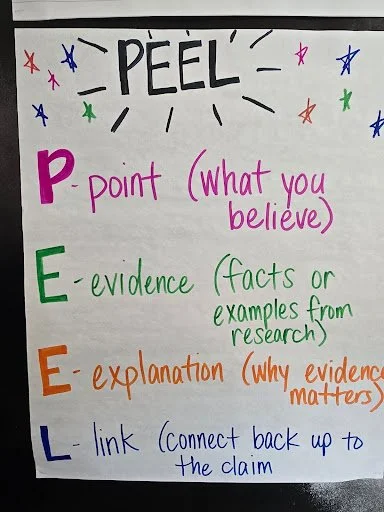
Figure 2. PEEL Paragraph Structure for Writing Arguments. Teacher Poster
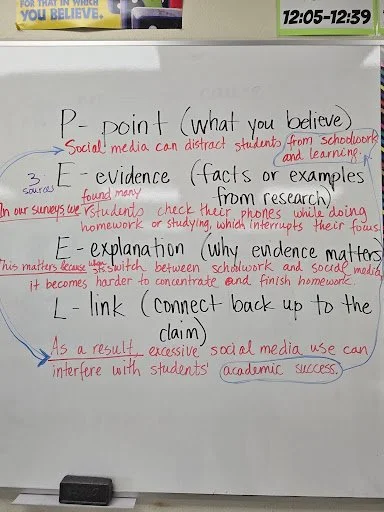
Figure 3. PEEL Definitions with Examples
PEEL Definitions with Examples
P-Point (what you believe)
Social media can distract students from schoolwork and learning.
E - Evidence (facts or examples from research)
In our surveys, we found many students check their phones while doing homework or studying, which interrupts their focus.
E - Explanation (why evidence matters)
This matters because when students switch between schoolwork and social media, it becomes harder to concentrate and finish homework.
L - Link (connect back up to the claim)
As a result, excessive social media use can interfere with students’ academic success.
Teaching PEEL Through Deconstruction and Joint Construction
Deconstruction: Seeing How Argument Paragraphs Work
Deconstruction is the phase where students learn to read like writers. Instead of asking students to write a PEEL paragraph right away, the teacher slows the process down and helps students uncover how an effective paragraph is organized and how each part contributes to meaning.
What the Teacher Does
Selects a short, accessible argument paragraph on a familiar topic (e.g., mobile phone use) (Figure 2).
Reads the paragraph aloud and guides students to identify:
Where the Point is introduced
What counts as Evidence
Where the writer Explains the evidence
How the paragraph Links back to the overall claim
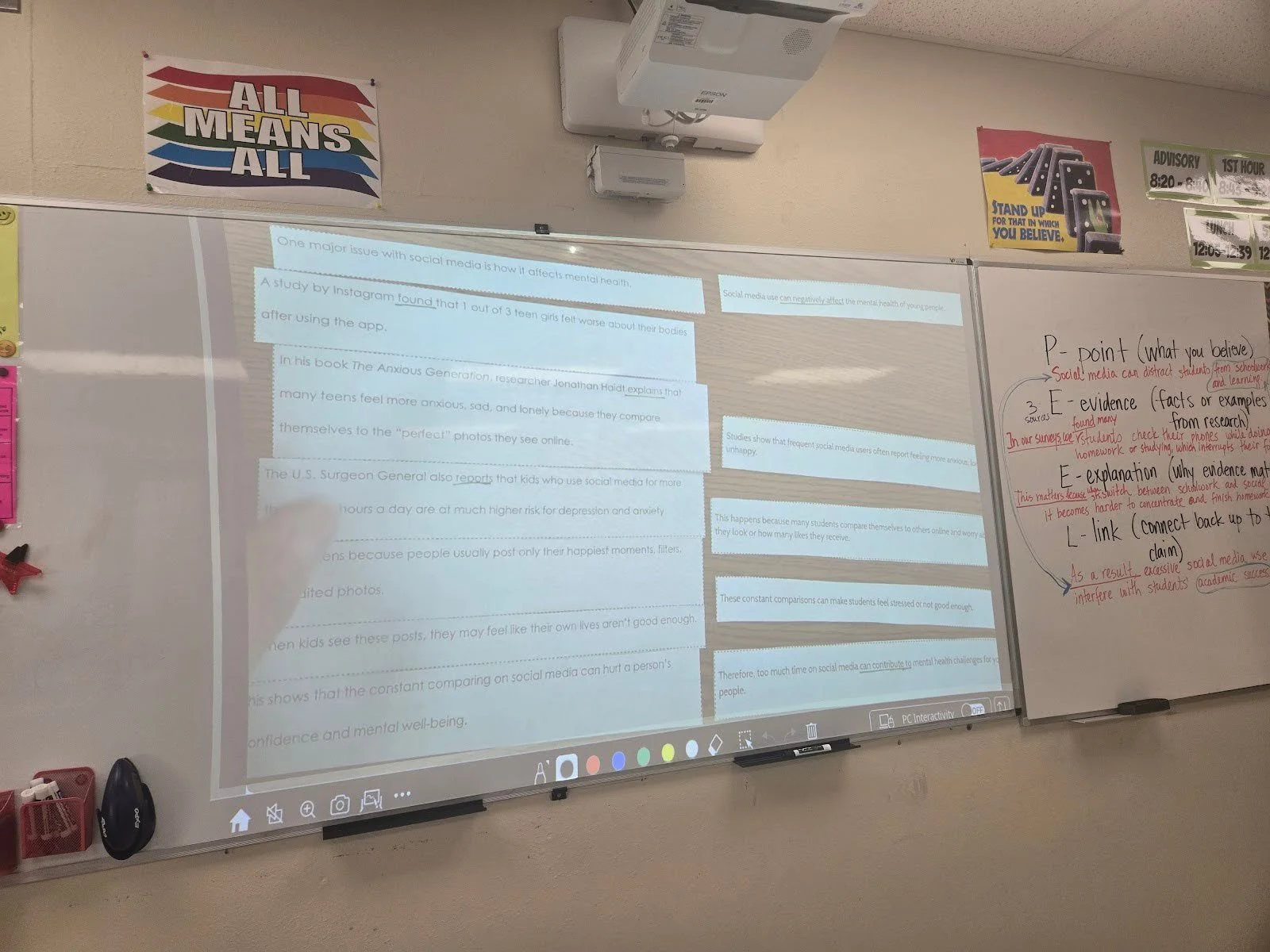
Uses color-coding, brackets, or labels (P / E / E / L) directly on the text (Figure 4).
Models think aloud during guided noticing, then send students off to do the same when they put the sentences in order.
“This sentence tells me what the paragraph is about—that’s the Point.”
“The job of this sentence is not to leave the CLAIM sentence hanging, but it supports it with evidence.”“Notice that the Evidence includes more than 1 sentence. How many sentences are there?”
Then gives students cut-up sentences and ask them to put them in order, and then discuss the job of each sentence.
Gives another cut-up paragraph with a slightly different structure and asks students to compare the paragraphs and how they are structured in two paragraphs.

Figure 4. Color-coded PEEL paragraph
Paragraph from Figure 4: [(Point) One major drawback of social media is how it affects mental health.] [(Evidence) A study by Instagram found that 1 out of 3 teen girls felt worse about their bodies after using the app. In his book The Anxious Generation, researcher Jonathan Haidt explains that many teens feel more anxious, sad, and lonely because they compare themselves to the “perfect” photos they see online. The U.S. Surgeon General also reports that kids who use social media for more than three hours a day are at much higher risk for depression and anxiety.] [(Explains) This happens because people usually post only their happiest moments, filters, and edited photos. When kids see these posts, they may feel like their own lives aren’t good enough.] [(Links) This shows that the constant comparison on social media can hurt a person’s confidence and mental well-being.]
What Students Do
Read the sentences individually. Then, with a partner, they order the cut-up sentences in the right order. Match sentences with each job: Point, Evidence, Explanation, Link.
Notice that in some cases, there is more than one sentence per stage.
Explain to their partner the difference between Explanation and Evidence.
Discuss that there may be two or more sentences in the Evidence part.
Begin to name the work each sentence does (claiming, supporting, explaining, connecting).
For multilingual learners especially, this phase builds shared language about writing and reduces cognitive load later, when they are asked to produce their own arguments.
Joint Construction: Writing the Argument Together
Joint Construction is where students and teachers co-write a PEEL paragraph. The responsibility is shared, and the teacher provides heavy scaffolding while keeping students intellectually engaged.
What the Teacher Does
Starts with a clear question or claim already discussed orally
(e.g., “Do mobile devices improve our lives?”).Writes in front of students (chart paper, document camera, shared doc).
Elicits ideas through targeted prompts:
“What do we want the reader to believe in this paragraph?” (Point)
“Which example best supports that idea?” (Evidence)
“How does this prove our point?” (Explanation)
“How can we connect this back to the big question?” (Link)
Invite student contributions, allowing them to use the PEEL posters (Figures 1 and 2)
Revises publicly, explaining decisions:
“This sentence sounds like Evidence, but we still need to explain why it matters.”
What Students Do
Contribute ideas verbally before they appear in writing.
Decide which evidence fits best and justify their choices.
Help refine wording to sound more precise and written-like.
See how a spoken idea can be reshaped into academic language.
Why This Phase Matters
Bridges the gap between understanding PEEL and using it.
Models how writers pause, rethink, and revise.
Gives students confidence before they attempt independent writing.
Makes explicit the shift from spoken-like reasoning to written-like argumentation.
In Summary
We hope this blog provided you with something practical to work with and a clear reminder that PEEL is not a formula to fill in, but a basic structure that helps writers guide their readers through their thinking. When taught through deconstruction and joint construction, PEEL supports students in making intentional choices about ideas, evidence, and explanations—moving their writing from spoken-like reasoning to purposeful, written-like argumentation.
